Here's something most pilgrims don't know: when the Char Dham temples close their doors in November, the yatra doesn't end. It moves. The idols of all four dhams travel down to winter abodes in the lower hills, where darshan continues all winter — no crowds, no trekking, and no 3,500-metre altitude. If you can't (or won't) do the summer yatra, this is the alternative almost nobody tells you about.
Where each dham goes
| Dham | Winter abode | Notes |
|---|
The winter seats are all in the lower hills — road-accessible, warm enough with a jacket, and visited by a fraction of the summer crowds.
Why people choose winter Char Dham
- No trekking. No 16 km to Kedarnath. You drive to the winter abode and walk in.
- No crowds. You'll share darshan with a few dozen people, not a few thousand.
- Cheaper. Hotels and packages drop sharply after November.
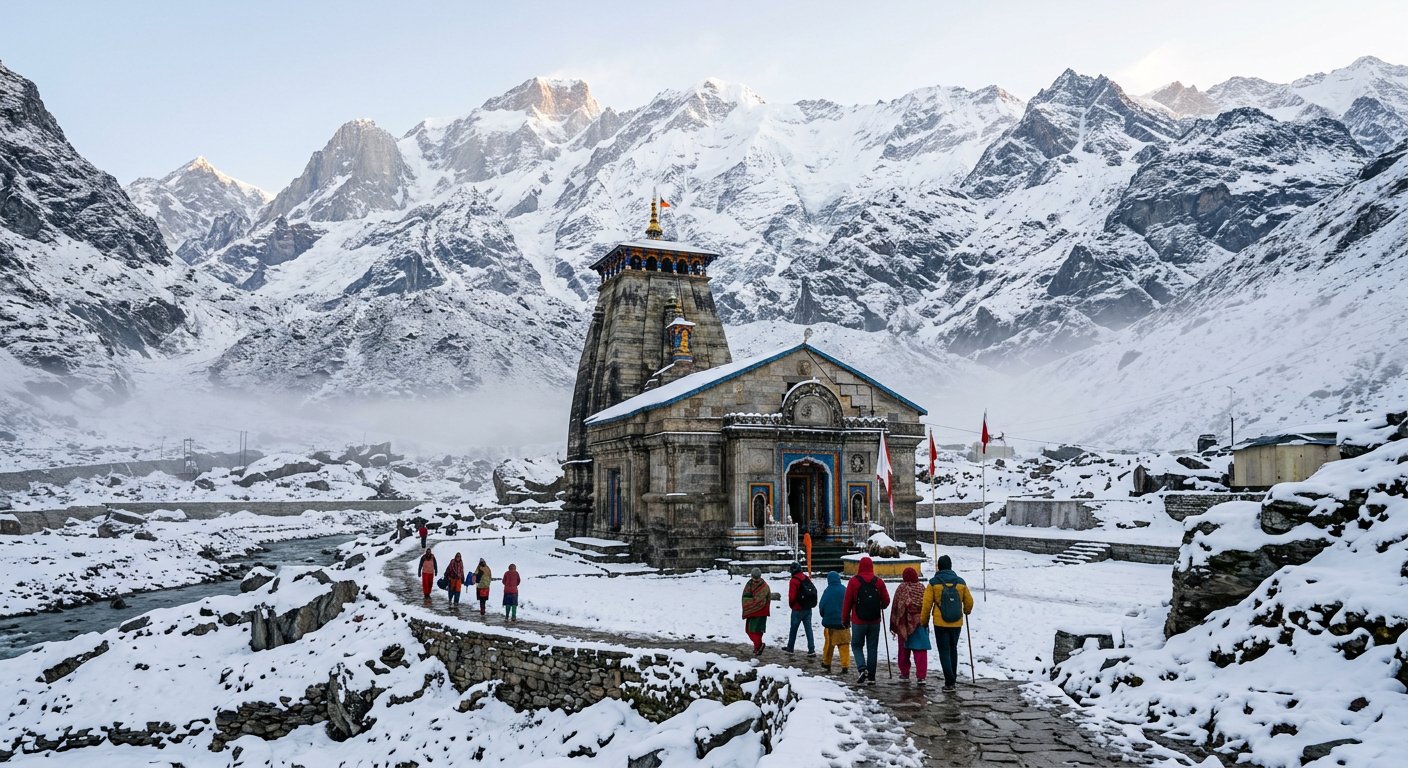
- Snow. For many, seeing the Himalayan valleys in white is the draw in itself.
The honest trade-offs
- It's cold. December–January nights in the hills are near freezing. Pack proper woollens.
- Roads can close after heavy snowfall — usually briefly, but plan buffer days.
- You don't see the actual temples — you get darshan of the same idols in their winter homes. For most pilgrims that's the point; just know the difference.
A sensible winter route (7D/6N)
Haridwar → Ukhimath (Kedarnath's winter darshan) → Joshimath (Badrinath's winter darshan + optional Auli) → Mukhba (Gangotri) → Kharsali (Yamunotri) → Haridwar. All by road, all manageable in a week — that's our Winter Char Dham, 7D/6N from ₹15,017.
---
Book it: the Winter Char Dham Yatra (7D/6N from ₹15,017) runs November–April, with heated stays, satvik meals and a driver who knows the snow roads. See the package → or WhatsApp +91 88497 20561.
*Read next: Char Dham 2026 guide · Kedarnath guide*